Lay of the Land drops you into a voxel survival world full of danger, discovery, and freedom. Our Lay of the Land tips and tricks will help you get through the early game, survive the nights, build smarter, and avoid mistakes that can slow your progress quickly.
Table of Contents
Basics and World Generation
Every world in Lay of the Land is procedurally generated, so each save has its own seed and layout for caves, enemies, flora, fauna, ore, and structures. You always start at the Marble Gazebo. This is your fixed spawn point, and if you die before sleeping in a bed, you’ll respawn there. Because of that, your early priorities should stay simple:
- Get basic tools
- Find food
- Place light sources
- Craft a bed as soon as possible
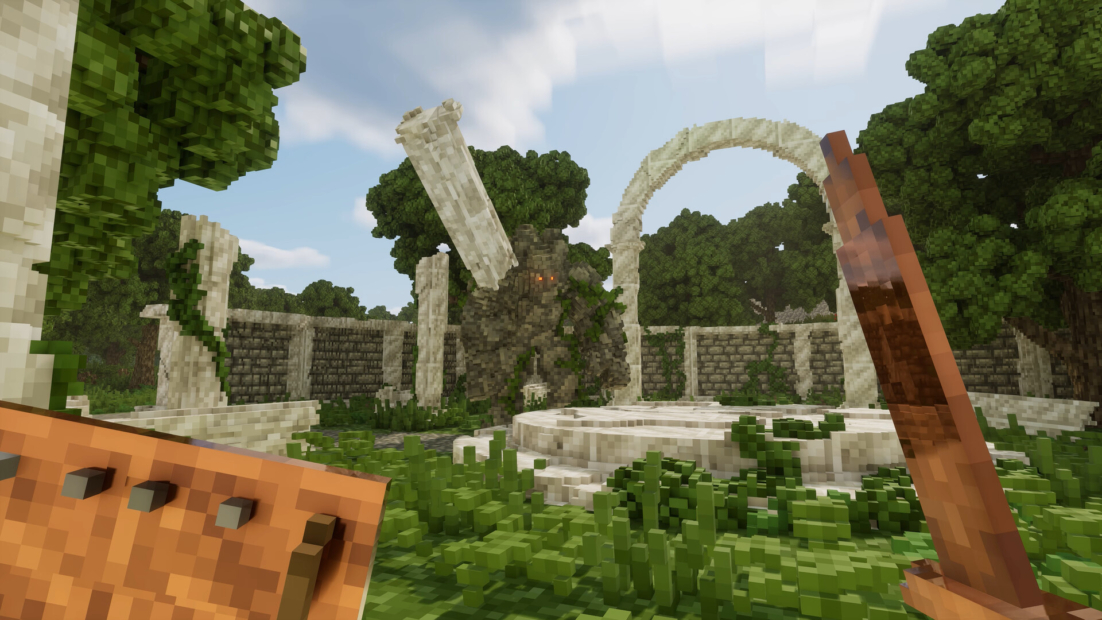
If you’re looking for a more relaxed experience, you can change the world settings before starting. Peaceful mode is ideal for exploring without constant threats. Creative mode is better suited for building, testing, or learning the game’s systems.
In creative mode, you can also:
- Generate a flat world
- Disable structures
- Turn off AI spawning
You can even combine creative mode and peaceful mode for a more laid-back sandbox.
In Lay of the Land, the environment itself can be just as dangerous as the enemies you face. Fire spreads, water flows, sand can collapse, and gas can make caves far more hazardous than they seem. So from the start, it’s important to consider the environment as part of the survival challenge, not just scenery.
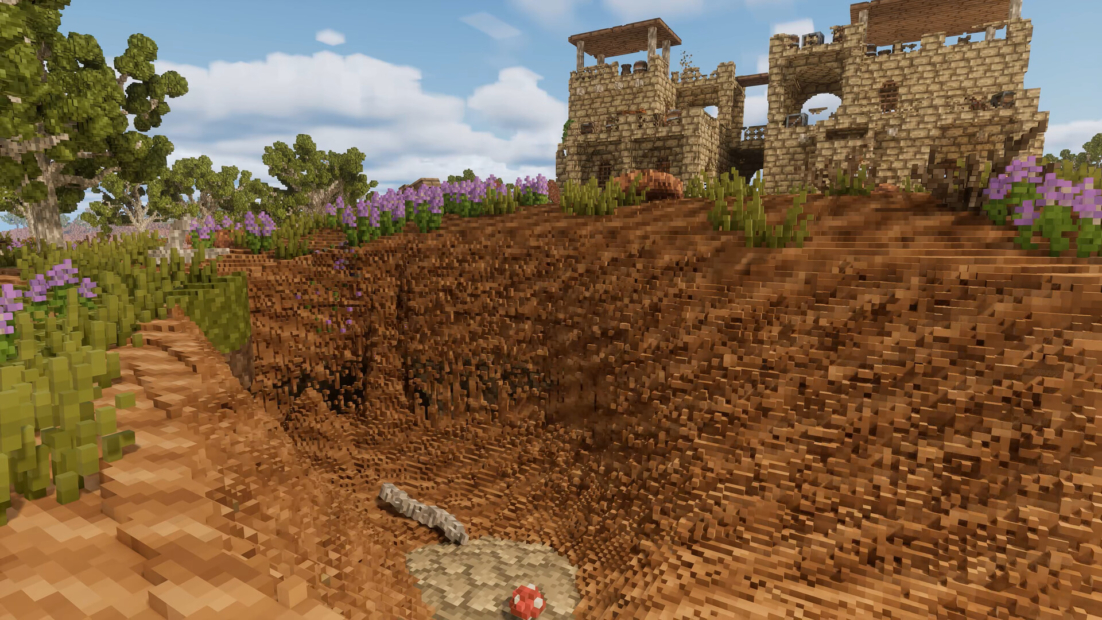
Your first useful tool in Lay of the Land should generally be the wooden axe because it makes gathering wood much easier. To craft it, start by punching vegetation to collect sticks and plant fiber, then look for flint on the ground.
- Collect three sticks and one flint
- Place them on a flat stone surface
- Line them up carefully
- Wait for the merge to register
If the recipe doesn’t work immediately, the problem is usually the placement, not the materials.
If you want to see which seed your current save is using, you can check at any time:
- Press ` to open the console
- Type Seed
- Hit Enter
- Read the seed notification on screen
One last tip: don’t rush into night combat too soon. Use height, fire, and temporary cover while you’re still learning how the world works.
Explore the World and Survive the Night
Exploration in Lay of the Land is how you find new resources, weapons, armor, tools, food, seeds, biomes, structures, and enemies. Initially, you’ll need to forage for simple materials like sticks, flint, and plant fiber to craft your first gear and begin progressing properly.

A helpful detail here is that the game doesn’t leave you guessing entirely. If you hover over an ingredient in the crafting menu, it shows you where that item can be found. That makes early exploration much less random and helps you focus on what you actually need instead of running in circles.
There is no single correct way to play Lay of the Land. You can push outward aggressively, start fighting right away, or take it slower and focus on crafting, cooking, and building first. The key is that exploration continues to support your progress, no matter which route you choose.
That said, the first night is when the game begins to test whether you planned ahead. You don’t need a perfect base yet, but you do need some basics in place to avoid turning night one into a panic simulator.

Your night one checklist should look like this:
- Make rope from fiber bundles because rope is essential for many early recipes
- Secure food and fuel so you can recover and keep your fire going
- Place torches on the paths leading to your shelter, not just right next to it
- scout a short retreat route you can fall back through if things go wrong
- Start planning for your first bed once wood and wool are reliable
Light is more important than you might think in Lay of the Land. Torches aren’t just for better visibility. They help create safer spaces and make it easier to spot approaching enemies. The same applies to retreat routes. A cliff edge, shallow water crossing, or narrow gap can save you if you suddenly get overwhelmed.
If you view exploration as more than just wandering around and use it to prepare for the next night, you’ll find it much easier to survive the early game. In Lay of the Land, good exploration is really just preparation in disguise.
Crafting Tips
Crafting in Lay of the Land is much more hands-on than in most survival games. You’re not just clicking a recipe and waiting for a progress bar. You drop materials on the ground, line them up, and craft from what’s physically there. That makes the system more interactive but also a bit messier until you get used to it.
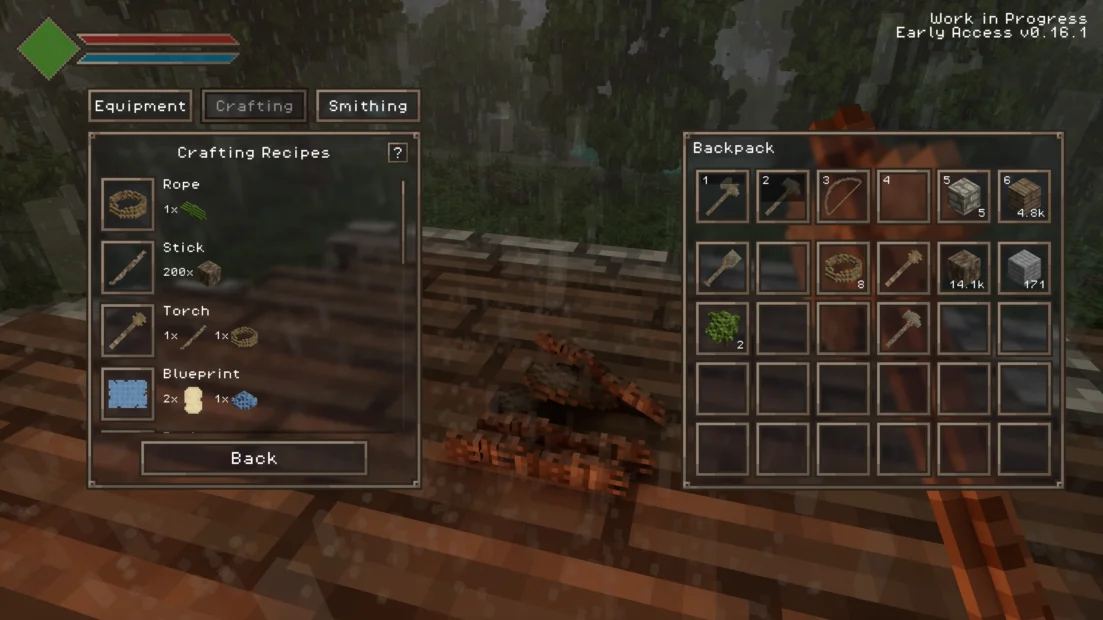
To craft something, first open your inventory and place the materials needed on the ground. Then aim at them and hold the Craft button, which is F on the keyboard or Up on the D-pad of the controller. A menu will appear showing all recipes you can make from the items in front of you. After selecting one, the crafted item will appear on the ground, and you need to pick it up along with any leftovers.
The basic process looks like this:
- Look at the ground and open your inventory
- Drop the needed ingredients one by one
- Close the inventory and aim at the items
- Hold F
- Select the recipe you want
When you first spawn in Lay of the Land, only the most basic recipes are available. This includes items like Rope in the General tab and the Flint Dagger in the Weapons tab. As you explore and gather more materials, you unlock additional recipes for tools, weapons, building parts, furniture, and decorations.
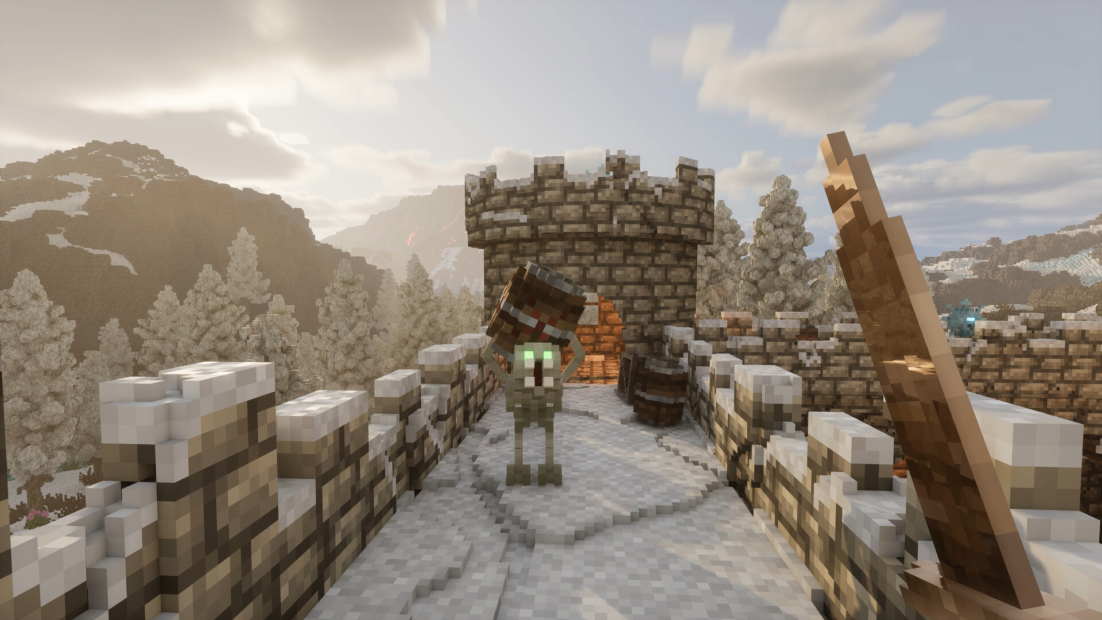
That is why crafting and exploration continuously influence each other. The more materials you discover, the more options you unlock, and the more useful your next trip becomes.
A few early crafting tips make life much easier:
- Use a flat, clean surface whenever possible
- Drop items with a bit of space instead of piling everything into one spot
- Remove clutter nearby if the recipe doesn’t appear
- Remember that leftover materials stay on the ground
The physics-based system in Lay of the Land is what trips up most new players. Slopes, uneven ground, and nearby objects can all disrupt your setup. If a recipe doesn’t work, it’s usually not because you have the wrong ingredients. More often, it’s just that the placement is awkward.
Think of the ground like a real workbench:
- Cleaner surfaces give you more reliable crafting
- Better alignment means fewer failed attempts
- Early failures are useful because they teach you what kind of setup works
Later on in Lay of the Land, crafting becomes much more complex. Once you move into metalworking, you’ll start dealing with smelting, molds, fuel control, and forging. This is where the game shifts from basic survival gear to equipment capable of handling tougher enemies and more dangerous areas.

Once you reach that point, keep these habits in mind:
- Keep duplicate molds if you can
- Store materials by biome or resource type
- Don’t rush important pours and upgrades
- Prepare backup gear so one bad trip doesn’t slow your progress too much
Elemental upgrades matter, too. Fire, ice, and lightning sigils can affect how well your weapons perform, especially against tougher enemies. It’s wise to test them on weaker targets before committing rare materials to a setup you might not even like.
Building in Lay of the Land
Building is a core part of Lay of the Land and uses a voxel-based system, allowing you to place blocks precisely and shape your base however you want. You craft building materials such as wooden planks and stone bricks from raw resources, then place them one by one or drag them out in larger sections.
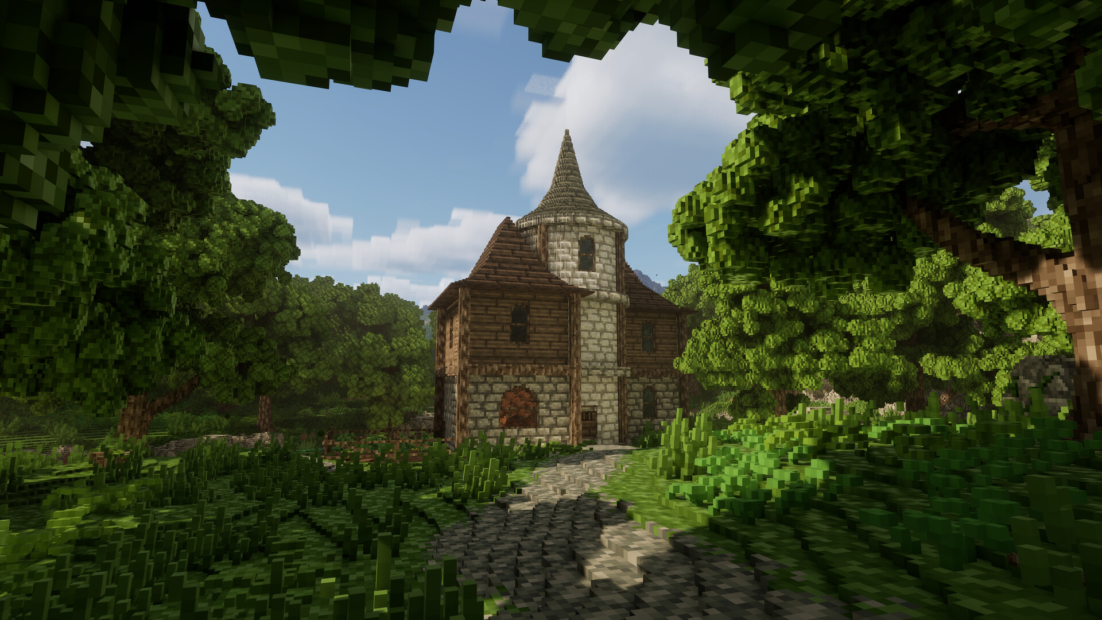
A few basics are worth knowing right away:
- Blocks snap to the grid automatically
- They fill empty space without replacing existing blocks
- You can remove individual voxels with an empty hand
- This lets you carve out more detailed shapes and designs
That makes it easy to start with simple walls and floors, then add more character later. You’re not stuck with plain boxes unless you want to be.
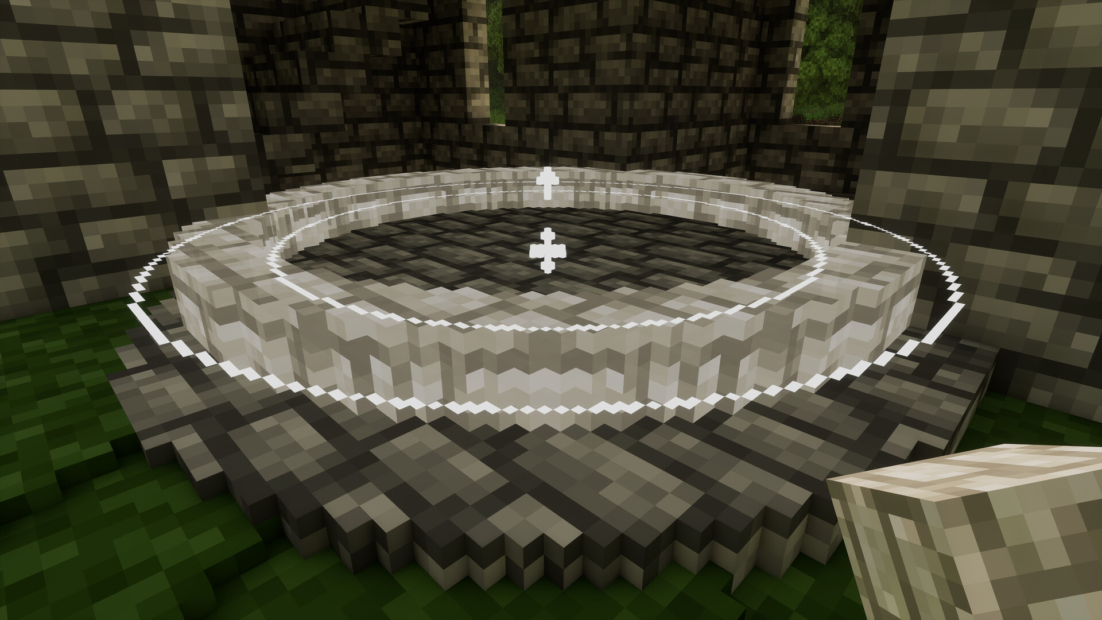
The main building tools in Lay of the Land help a lot with bigger projects:
- Cylinder tool for towers, pipes, and round rooms
- Cone tool for roofs and spires
- Terrain sculpting for moats, terraces, and raised ground
- Keep flammables and heat sources apart
- Place storage somewhere safe
- Put sleeping areas higher up if possible
- Light your building site before nightfall
You can also place furniture such as beds, chairs, tables, bookshelves, and chests to turn a shelter into a proper base. If you build something you really like, you can save it as a blueprint prefab and reuse it in other places or even in other save files.
Combat Guide
Combat in Lay of the Land gives you three main schools to work with, and each one shines in different situations. There is no single best choice all the time, so it helps to understand what each style is good at before you commit.
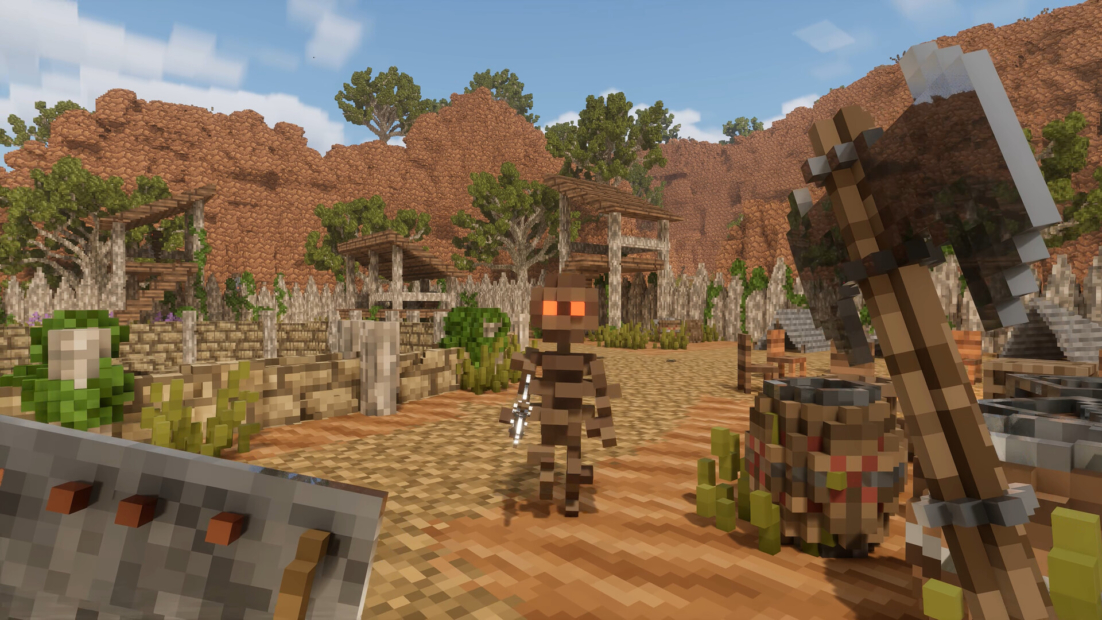
Melee is the most direct option and usually the strongest in tight spaces. It hits hard, creates stagger windows, and handles armor well, but it also requires good stamina management. Swords feel faster and more balanced, axes are better for bleed pressure, and maces are slower but great for stuns.
Melee works best in Lay of the Land when:
- Fights happen in tight areas
- You can manage stamina carefully
- You pair it with a shield or a useful offhand item
Ranged is safer and works especially well when you can kite enemies around terrain. Slopes, ledges, scaffolding, and open spaces all make bows or ranged setups more effective. The downside is that armored targets can be annoying unless you have the right ammo or a good height advantage.
Ranged is strongest when:
- You fight in deserts, ruins, or open terrain
- You stay stocked on ammo
- You combine it with traps for tougher enemies
Magic becomes available in Lay of the Land once you craft a wand with a Mana Crystal. After that, you can learn new spells by finding Magic Runes in chests. Magic excels at area control, burst damage, debuffs, and utility, but it is much riskier if enemies catch you off guard at close range.
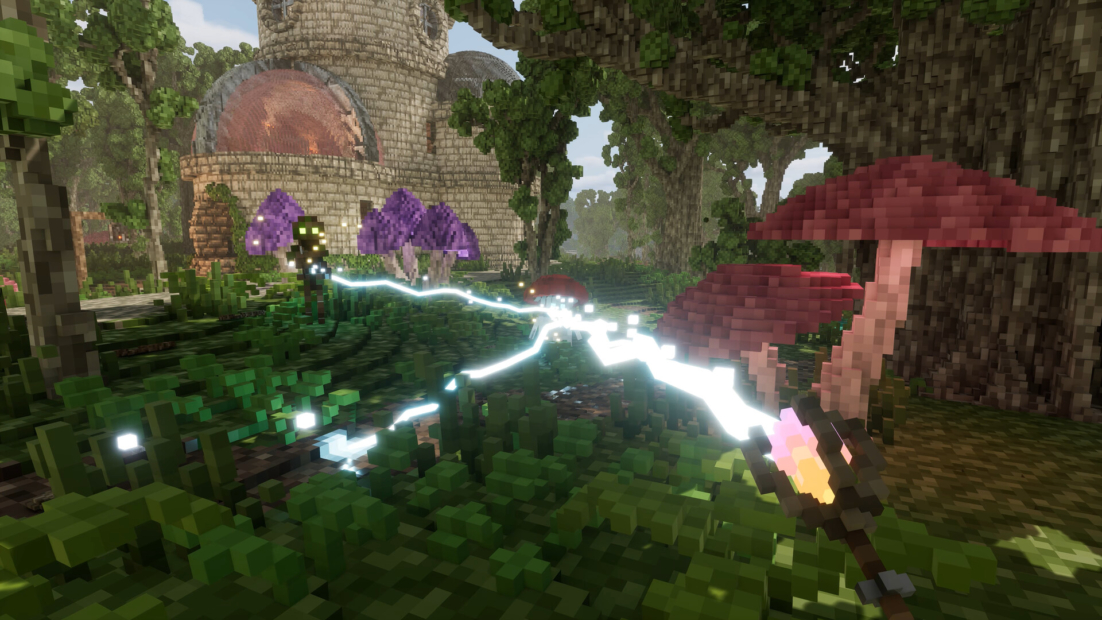
Magic is best when:
- Enemies come in groups
- You have room to keep a safe distance
- You want more options for combat and traversal
As you explore more, you can also craft stronger wands after summoning and defeating bosses, so magic scales well if you stick with it.
Elemental sigils add another layer to combat in Lay of the Land. Fire sigils are great for damage over time, especially against tankier enemies and bosses. Ice sigils are better for slowing enemies, safer kiting, and more breathing room during fights. Both can be enchanted at a rune altar once you unlock them.
A few general combat tips matter no matter what build you use:
- Don’t waste all your stamina on panic movement
- Split food across your hotbar so you don’t use the wrong buff by accident
- Use terrain and hazards when your raw damage isn’t enough
- Keep your weapon style matched to the fight, not just your personal favorite
At its best, combat in Lay of the Land is less about button-mashing and more about rhythm. If you manage your stamina, choose the right school for the situation, and use the environment effectively, fights become much easier.
Enhance your adventure with PLITCH!
If you want a more relaxed time, PLITCH’s Lay of the Land cheats can take a lot of pressure off the tougher survival mechanics. Codes like Unlimited Health, Unlimited Stamina, and Unlimited Mana make exploration, combat, and long resource runs much less punishing. Refill Health, Refill Mana, and Refill Stamina are especially useful if you want quick recovery without removing all the challenges.
For exploration and building, Unlimited Jumps, Flymode, Jump Power Multiplier, and the different movement speed options make it much easier to reach difficult spots or move around large builds. Set Time Of Day also gives you more control if you want to avoid dangerous nights or keep working in daylight. And if you need more materials, the Set Item Stack codes help keep your supplies stocked.
Check out this blog and our YouTube channel to learn more about PLITCH.
Happy Gaming!
You might also like:
 English
  Deutsch