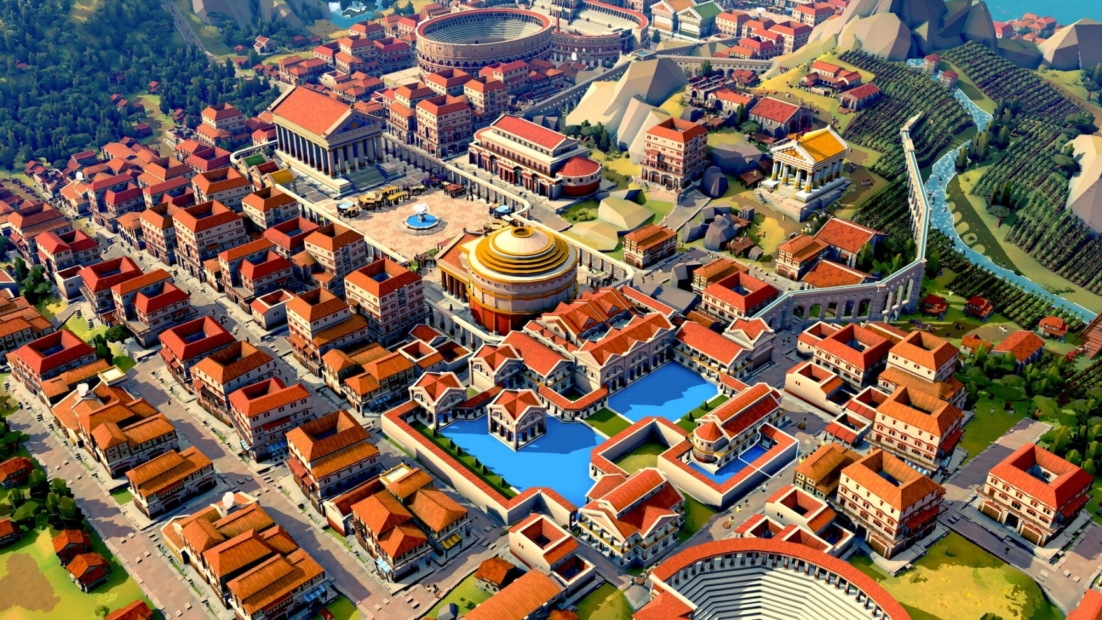
Nova Roma can feel overwhelming at first, but once you understand its systems, the game becomes much easier to manage. Our Nova Roma guide will help you build a stable city, manage your citizens, and avoid mistakes that could ruin a promising settlement.
Table of Contents
What to Do First
Your first years in Nova Roma can go wrong very quickly if you expand without a plan. The early game is less about building as much as possible and more about creating a city that can actually support itself. If water, food, and logistics are unstable, even a promising settlement can collapse before it truly gets started.
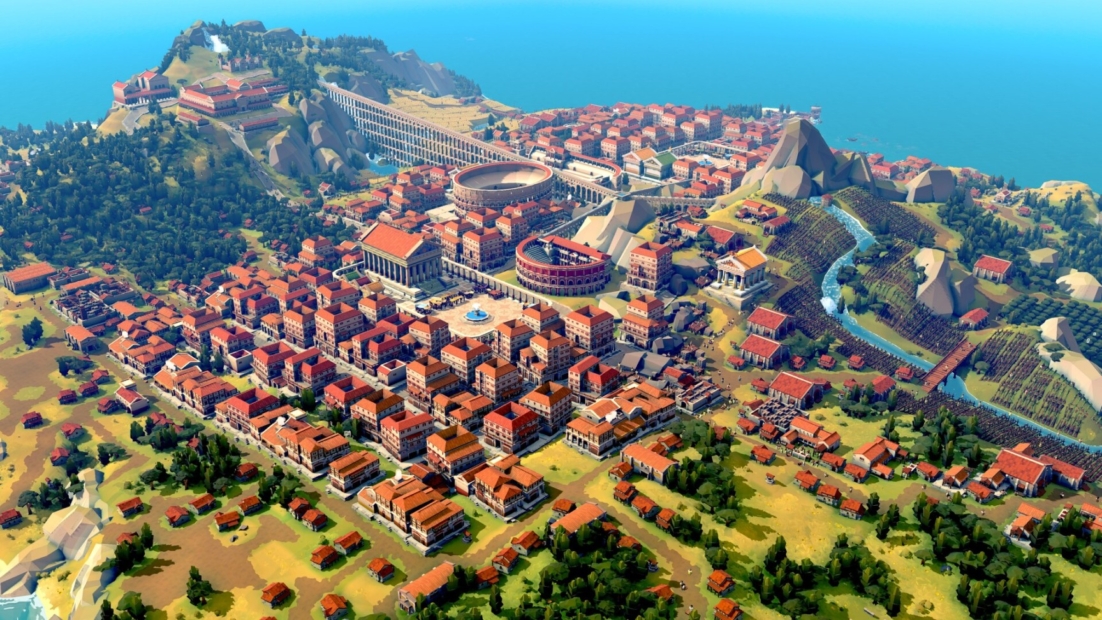
The first big decision in Nova Roma is where you place your outpost. Choose a location that’s easy to access and has enough space for roads and future growth. Since most buildings need to connect back to the outpost, a poor starting position can slow down your entire city from the start.
Your early priorities should be:
- Set up water before building houses
- Gather wood and stone immediately
- Keep roads connected to the outpost
- Build food production with a safety buffer
- Expand slowly instead of mass zoning
One of the most important rules in Nova Roma is simple: water comes before housing. If you zone homes before your aqueducts are ready, citizens can leave almost immediately.
Food is equally important. Don’t aim to produce exactly what your people need. Try to stay about 20 percent above your current demand so a weak harvest doesn’t wreck your settlement. It also helps to diversify your food sources. Wheat is useful, but it’s not always reliable, so getting two or three Fishing Docks early can provide a steady backup.
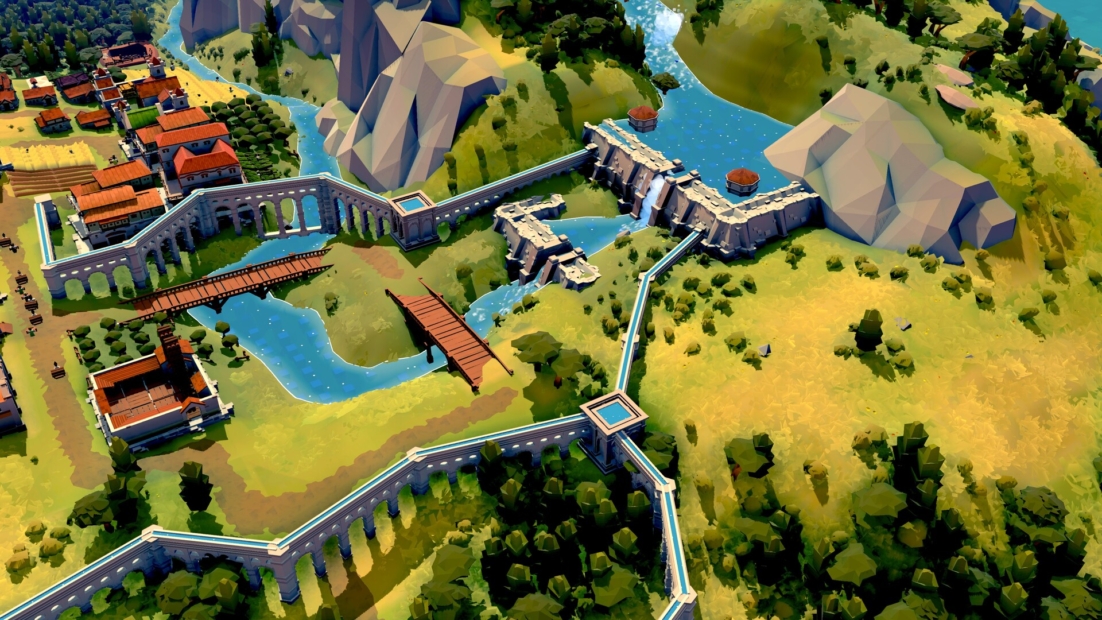
Another common issue in Nova Roma is transport distance. Even if your city has enough food overall, people can still go hungry if supplies take too long to arrive. Keep granaries close to your homes, ideally within about ten tiles, so your storage actually supports the people who need it.
A compact city layout makes everything easier. A 6×6 residential block is an effective early setup because it keeps services close and efficient. If you place a small market and fountain in the middle, you get good coverage without spreading your city too thin. Just make sure dirty industry stays away from your water intake, or you could face bigger problems later.
Good early planning habits:
- Use compact city blocks
- Place granaries near housing
- Keep industry away from clean water
- Avoid building more homes than your city can support
- Treat roads as essential infrastructure, not decoration
You’ll also need materials immediately. Early on, the Clear Land tool is one of your best options. Use it on trees and small stones so idle citizens can gather wood and stone for your initial buildings. Later, you can switch to more reliable production methods with a Forester in wooded areas and a Stone Quarry near deposits. These buildings work best when connected by roads and supported by nearby housing, so workers do not waste time walking across the map.
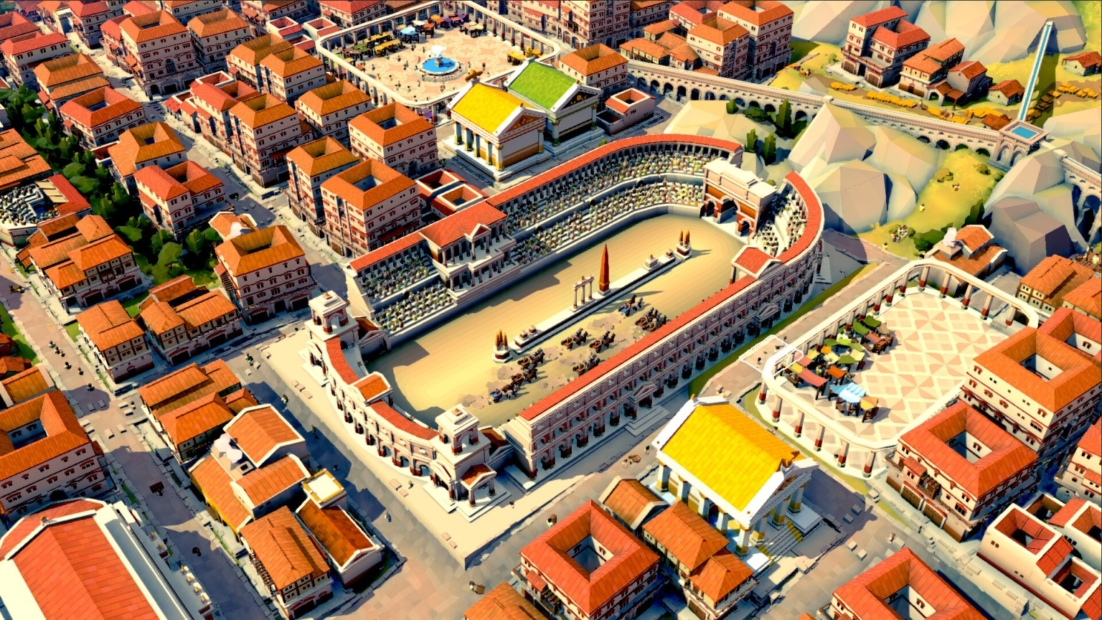
It also helps to set up a shrine to Ceres in your first year. The agricultural bonus can significantly impact early gameplay, especially when your food economy remains vulnerable.
The golden rule of the early game is to grow gradually. Adding too many homes at once can cause your logistics, food supply, and worker distribution to break down simultaneously. A smaller city with steady systems is much stronger than a larger one that is starting to fail.
Population and Taxes in Nova Roma
Once you gather enough wood, you can start building Hovels and provide your citizens with a place to live. Later, you’ll unlock better residential buildings that can accommodate more people, but a larger population also brings greater demand. In Nova Roma, growth only benefits your city if it can actually support it.
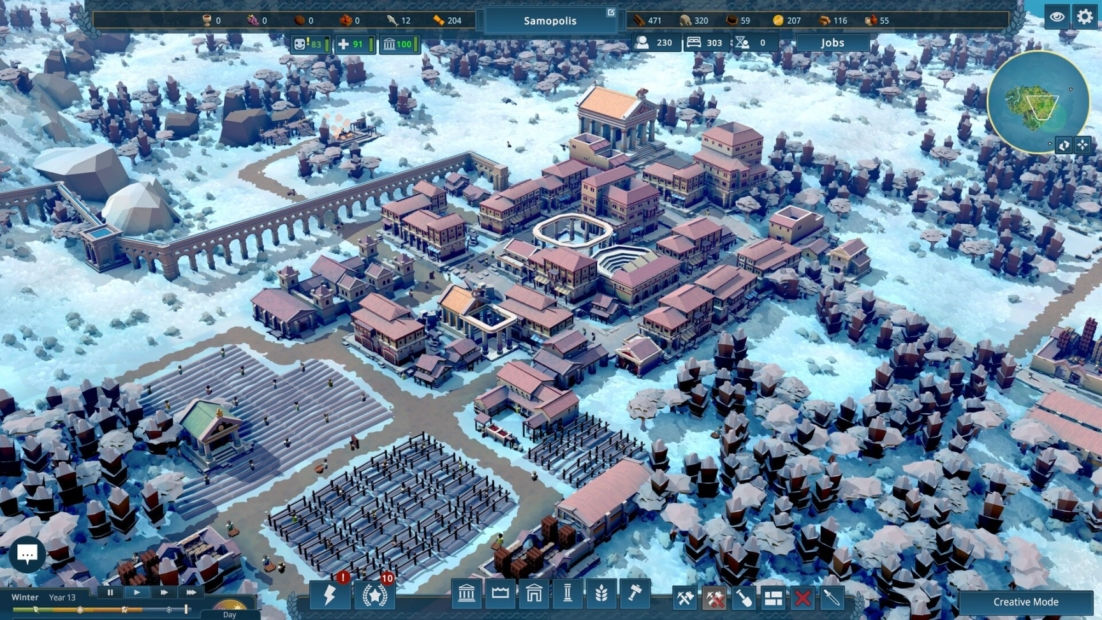
The first priority for your residential areas in Nova Roma is water. Place wells close enough to homes to ensure your people stay supplied. Winter is the next major challenge, which is why a Charcoal Maker is such an important building early on. Heating homes with raw wood works temporarily, but it depletes your resources too quickly. Charcoal is the much safer long-term solution.
As your population grows, citizen expectations also increase. You can click on buildings to see what residents want, and fulfilling those needs helps keep them satisfied. This is important because immigration relies on it. If you have empty beds, ships will occasionally arrive with new settlers, but they will only stay if your city is in good condition.
To keep your population growing, make sure you have:
- Housing with free beds
- Wells near homes
- Enough food and heating for winter
- Happy citizens with their needs covered
- Reliable repairs for damaged buildings
Another thing you shouldn’t overlook in Nova Roma is building maintenance. Structures deteriorate over time, and some can even catch fire. If you neglect this for too long, buildings might collapse and cause bigger problems across your city. A Masonry handles this by automatically repairing damaged buildings, making it one of the most valuable support structures in the early and mid-game.
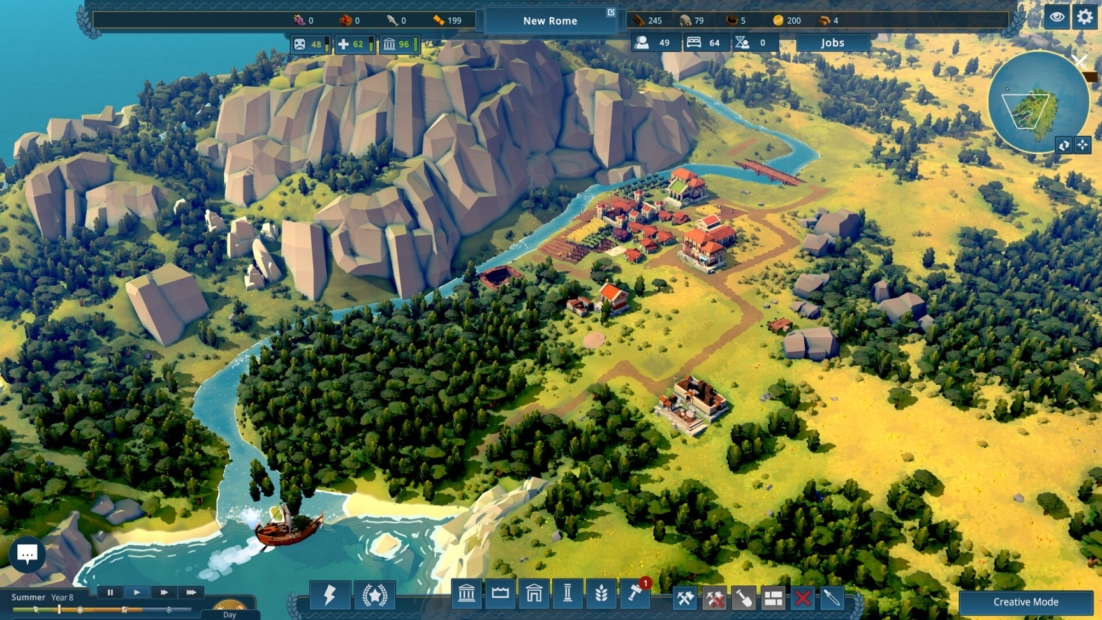
Once your city in Nova Roma begins to grow, you also need a way to generate revenue. Gold is vital for specialized workers, soldiers, and larger building projects. Your primary income source is the Tax Office, which collects taxes from homes within an eleven-mile radius.
This is where things get complicated. Taxes generate revenue, but they also reduce happiness. If you set the rate too high, immigration slows, and your current citizens might leave. A better approach is to place Tax Offices where they cover wealthier homes, since richer houses provide better returns than poorer ones.
Smart tax strategies:
- Place Tax Offices near better housing
- Avoid pushing tax rates too high
- Protect happiness so immigration keeps flowing
- Use poor housing for population, not profit
- Let richer districts carry more of your economy
The important lesson is that population and taxes need to stay in balance. More people can help grow your city, and more taxes can support it, but pushing either one too far can cause the entire system to collapse.
What to Produce
Production in Nova Roma centers on creating the right goods at the right time. At first, your priority should be survival. Later, you can move toward products that generate significant profit.
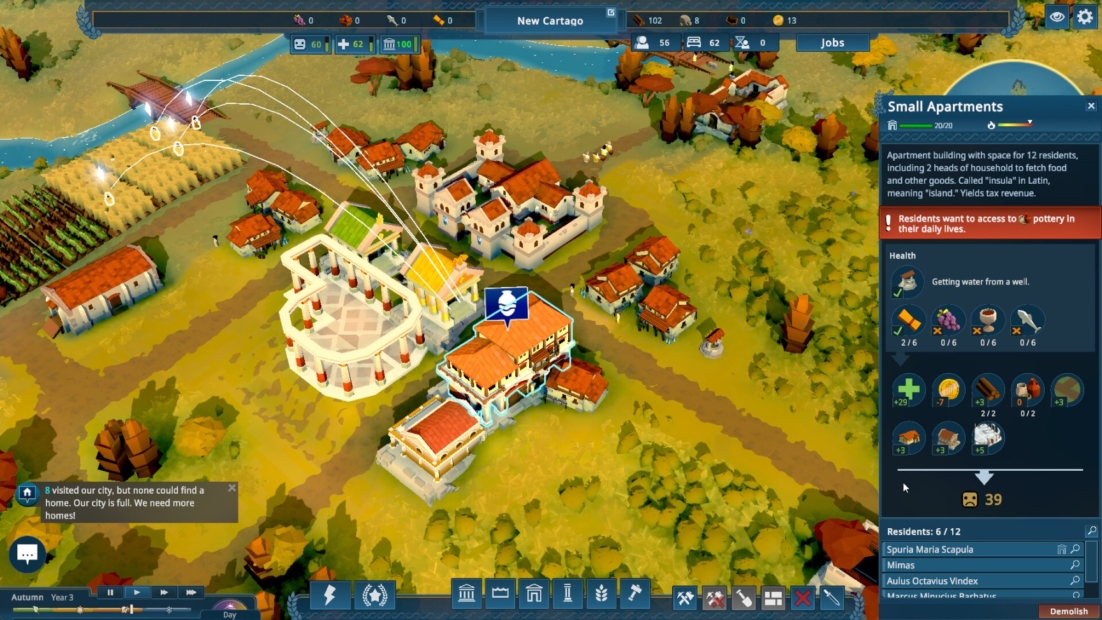
For food, you’ll primarily work with wheat, grapes, and fish. Crops need to be unlocked first, then placed on fertile land. Always check fertility before planting, because better land yields better crops. Areas near riverbeds are usually your best choice.
One thing to watch out for is soil exhaustion. If you plant the same crop on the same land repeatedly, fertility decreases. When that happens, remove the fields and let the area rest for a few years before using it again.
Your best early production priorities are:
- Wheat for a stable food base
- Fish as a reliable backup during weak harvests
- Granaries, once your outpost storage is no longer enough
- Timber and stone to support constant expansion
Fishing is especially beneficial in Nova Roma because it doesn’t rely on farmland. Simply place Fishing Huts near suitable fishing spots along the coast. This provides a reliable second food source and makes your city less vulnerable to poor farming conditions.
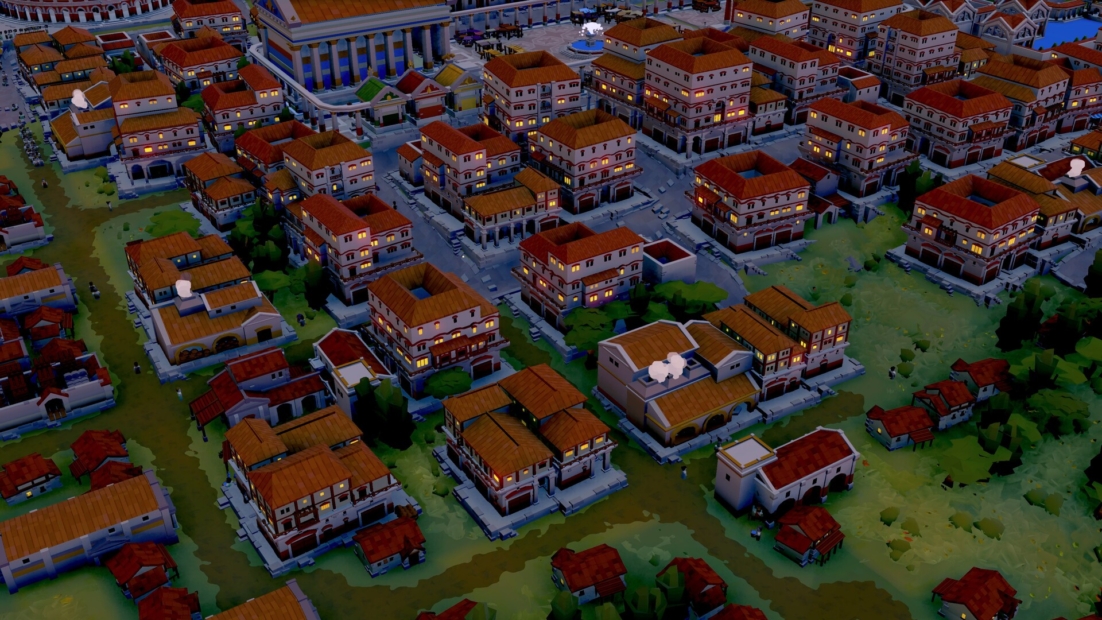
Once your basic needs are covered, start thinking about high-value goods.
Best products for long-term profit:
- Fine Wine, made from grapes and pottery
- Furniture, made from timber
- Iron Tools, made from iron ore and coal
Fine wine is one of the strongest export items in Nova Roma, especially if your winery is near the docks. Furniture is reliable as well, but ensure your logging camps are backed by storage so workers don’t waste time. Iron tools are highly valuable, but they are also essential for your upgrades, so use them wisely.
The simple point is this: produce food first, profit second. A wealthy city is pointless if your people are starving.
How to Appease the Gods in Nova Roma
Religion in Nova Roma isn’t just for atmosphere. The gods can help your city thrive or destroy it if you ignore them. That means you should treat temples as part of your core infrastructure, not as optional decoration.
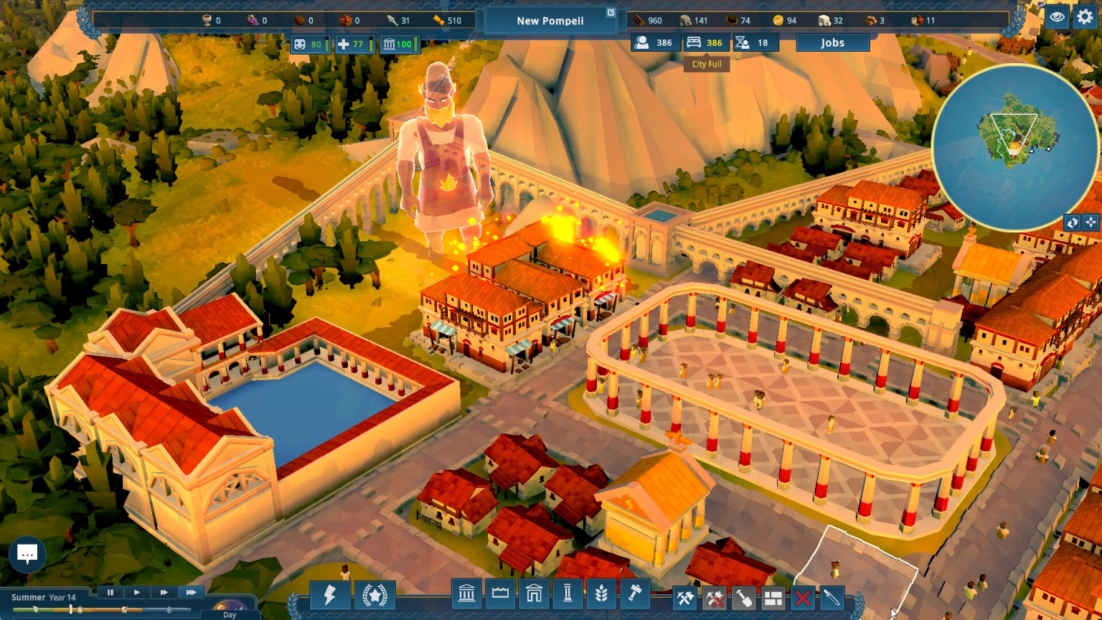
Whenever you build a temple, you dedicate it to a specific god. This grants you access to Divine Tasks, which reward you with Favor upon completion. Favor is very important because it helps unlock new technologies, improve crops, and advance industry.
Always check the Religion tab regularly. If a god like Ceres drops to Indifferent, react immediately. A festival is usually much cheaper than dealing with the disaster that comes next.
What the gods do for you:
- Jupiter increases happiness nearby, but can also summon lightning and ignite fires
- Ceres improves nearby farms and orchards, but can ruin your harvests
- Mars strengthens defense towers, but can weaken your military
- Neptune improves fishing output, but can trigger floods
- Vulcan boosts fire-based industry, but can burn it down
Temples in Nova Roma also serve as gold storage, which increases their usefulness. A Small Temple holds 200 gold, while a Grand Temple holds 1000. Because of that, acquiring a Large Temple early is a very strong strategy. It provides more flexibility and allows you to hold Festivals, which are one of the best ways to regain Favor and boost happiness.
Festivals cost luxury food, so you can’t spam them forever, but they’re often worth it when a god is close to turning against you.
If disaster strikes again, act quickly. When a plague occurs, one of the safest emergency strategies is to sever the road connecting the infected house to the rest of the city. It’s harsh, but it can prevent the outbreak from spreading throughout your settlement.
Best rules for handling religion:
- Check the mood of the gods every month
- Use festivals before anger turns into curses
- Build temples early, not late
- Prioritize Ceres in the early game
- React instantly to plague outbreaks
Play Nova Roma Your Way With PLITCH!
If you want a more relaxed experience in the game, PLITCH’s Nova Roma cheats can help reduce the pressure from parts that tend to spiral out of control. Free & Easy Build and Faster Building Speed are especially helpful when you want to expand quickly without waiting around for resources or construction times.
If your city is struggling, Refill Wood, Refill Stone, and Set Gold can help stabilize things quickly. Repair and Lower Damage to Building are effective safety measures when fires, decay, or disasters affect your infrastructure. And if sickness keeps ruining your plans, Villagers don’t get sick can make population management much easier.
Check out this blog to learn more about PLITCH and our Trainer Showcase on YouTube to see our cheats in action!
Happy Gaming!
You might also like:
 English
  Deutsch